
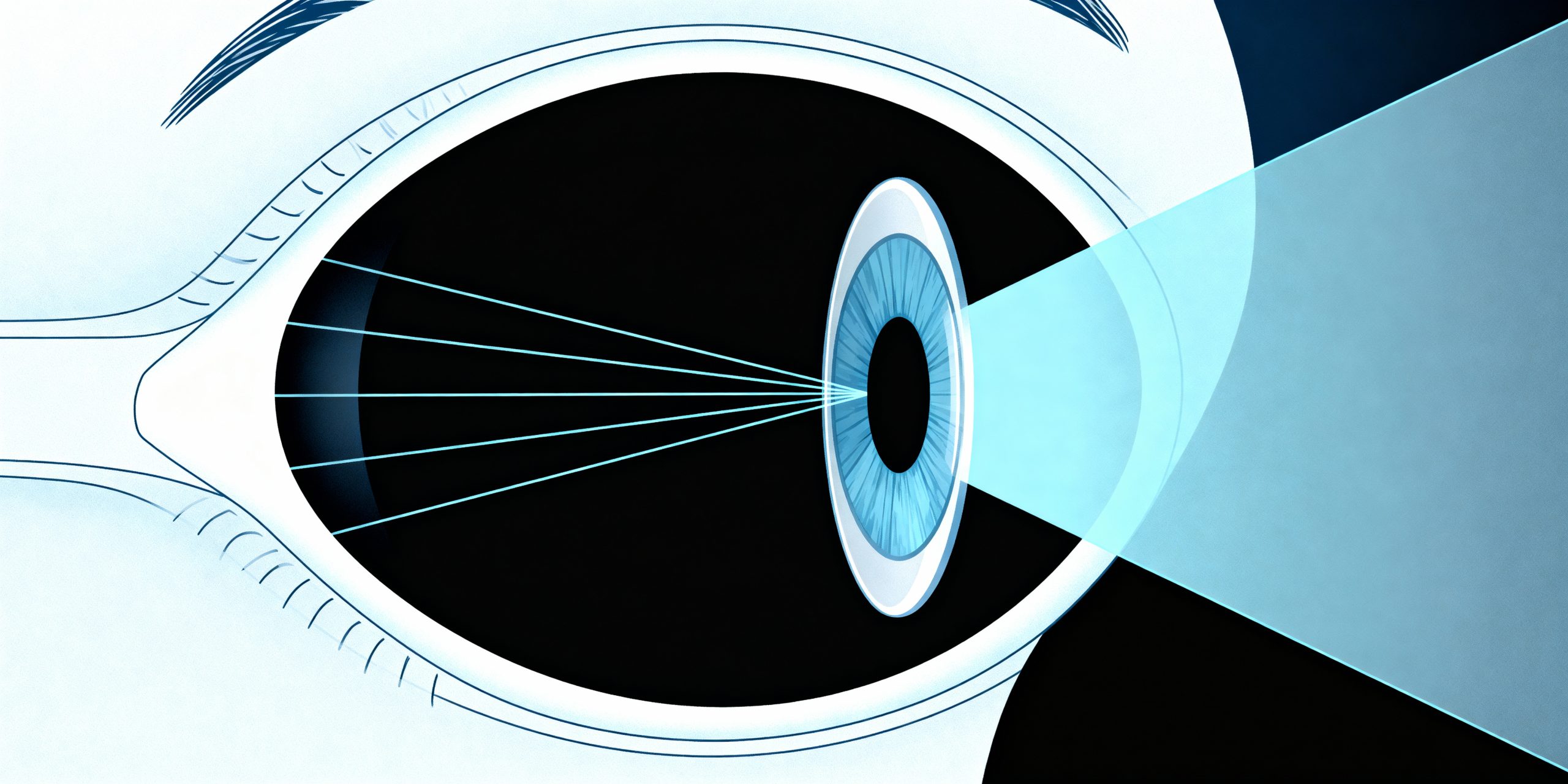
Phakic intraocular lenses (IOLs) represent an innovative approach to vision correction that works differently from traditional methods like glasses or standard contact lenses. These surgery based lenses are surgically placed inside the eye while preserving the eye’s natural lens, offering a permanent solution for those with moderate to severe refractive errors. Unlike laser procedures that permanently alter corneal tissue, phakic IOLs add a corrective element to the eye’s existing optical system without removing any natural structures.
Table of Contents
ToggleWhat are Phakic Lenses?
Phakic lenses are lens-based implants that are surgically placed inside the eye while leaving the natural lens intact. Unlike LASIK which reshapes the cornea, these lenses work as an additional optical element to correct vision problems, especially high nearsightedness (-5 to -25 diopters). The “phakic” designation means your natural lens stays in place, preserving your eye’s ability to focus at different distances. These lenses come in three types: angle-supported (front chamber), iris-fixated (attached to iris), and sulcus-supported (between iris and natural lens). Modern designs like the Phakic IOL include features that maintain healthy fluid flow within the eye. Patients need sufficient space in their eye’s front chamber (at least 3mm) for safe implantation. This procedure is especially beneficial for those with thin or irregular corneas who aren’t suitable for LASIK.
Note: The Eyecryl Phakic IOL is a posterior chamber lens designed for implantation in the ciliary sulcus in front of the natural crystalline lens.
How do Phakic Lenses work inside the eye?
Phakic lenses are specialized lenses that correct vision by adding an optical element to your eye. They work alongside your natural lens to focus light properly onto the retina. These lenses are placed either behind the iris (posterior chamber) or in front of it (anterior chamber). The Phakic IOL, a popular posterior chamber lens, sits invisibly behind the iris. Modern designs include a port that allows natural fluid circulation. Made from biocompatible materials like hydrophilic acrylic, these flexible lenses can be inserted through a tiny incision. Unlike laser surgery, phakic lenses don’t remove any tissue, preserving your cornea’s natural structure. They can also be removed if needed, making the procedure reversible.
Anterior chamber Phakic IOLs are placed in front of the iris, closer to the corneal endothelium. They provide effective vision correction but require careful patient selection due to the risk of endothelial cell loss. Posterior chamber Phakic IOLs, on the other hand, sit behind the iris and are less likely to affect corneal cells. Both options offer unique benefits depending on patient anatomy.
Eyecryl Phakic IOLs feature a 360 µm central hole that supports natural aqueous humor flow and helps maintain physiological intraocular pressure.
What is the difference between Phakic Lenses and Regular Contact Lenses?
Unlike regular contact lenses, which rest on the surface of the eye and require daily wear, phakic IOLs are surgically implanted permanently inside the eye.This eliminates daily maintenance and provides continuous vision correction. Phakic lenses work even during sleep and physical activities like swimming or sports, without concerns about displacement. Their internal placement prevents common contact lens problems such as dry eyes or infections. These surgery based lenses typically deliver better optical quality than regular contacts, especially for high prescriptions. They maintain stable positioning inside the eye, providing consistent vision across the entire visual field. While phakic IOLs require a higher upfront cost, they represent a one-time investment compared to the ongoing expense of regular contacts. They also preserve the eye’s natural focusing ability at different distances.
Who is a good candidate for Phakic Lenses?
Here’s a clear bulleted explanation of who makes a good candidate for Phakic Intraocular Lenses (IOLs):
- Best suited for patients between 21–45 years old.
- Prescription should be stable for at least one year.
- Especially beneficial for patients with high myopia (-5 to -25 diopters), beyond the correction range of laser surgery.
- Corneal Characteristics:
- Thin corneas (<500 microns) or
- Irregularly shaped corneas, which make laser procedures less safe.
- Must be at least 3 mm for safe lens implantation.
- Should be above 2,000 cells/mm² to protect long-term corneal health.
- Eyes must be free of glaucoma, cataracts, or other significant ocular diseases.
- Candidates should have realistic expectations about the results.
- Willingness to follow post-operative care instructions carefully.
- Specialized Phakic IOL designs can also correct moderate to high astigmatism.
What are the benefits of this lens-based vision correction method?
- Can correct very high myopia (up to -25 diopters), beyond the safe limits of LASIK or PRK.
- Does not remove corneal tissue, making it safer for patients with thin or irregular corneas.
- Keeps the eye’s natural lens intact, so patients maintain natural accommodation (ability to focus at different distances).
- Carries a lower risk of retinal detachment compared to clear lens extraction procedures.
- Unlike laser vision correction, Phakic IOLs can be removed or replaced, giving flexibility for future vision changes or new technology.
- Includes a central port for natural fluid circulation, reducing risk of pressure-related complications.
- Reported over 99% satisfaction in clinical trials (Phakic IOL).
- Vision often improves immediately after surgery, with stable results within a few days.
- Surgery takes only 15–30 minutes per eye, with minimal downtime.
Potential risks and considerations
The risks and points to consider regarding phakic IOLs are as follows:
For anterior chamber Phakic IOLs, the main concern is maintaining a safe distance from the corneal endothelium. If the lens is too close, it may cause long-term cell loss. This is why pre-operative measurements, such as anterior chamber depth, are especially critical when considering this design.
General Surgical Risks:
- Infection (endophthalmitis)
- Inflammation inside the eye
- Elevated intraocular pressure (IOP)
- Loss of endothelial cells, which are vital for corneal health
Serious but Rare Complications:
- Cataract formation if the phakic lens touches the natural lens.
- Corneal decompensation from long-term endothelial cell damage.
Lens Positioning Risks:
- Incorrect size or placement may damage eye structures.
- Anterior chamber lenses: risk of harming corneal endothelium if too close.
- Posterior chamber lenses: risk of cataracts if they touch the natural lens.
Role of Pre-operative Assessment:
- Advanced imaging and measurement reduce risks.
- Careful patient selection is critical for safe outcomes.
Visual Disturbances:
- Possible glare, halos, or reduced contrast sensitivity, especially in low light.
- Most often occur right after surgery and improve with brain adaptation.
- Important for patients who drive at night or need excellent night vision to consider.
Long-term Considerations:
- Eyes continue to age naturally even with IOLs.
- Presbyopia (age-related difficulty focusing on near objects) will still occur, often requiring reading glasses.
- Patients may still develop cataracts, requiring removal of both the phakic lens and natural lens later in life.
What to expect during the procedure?
Phakic IOL surgery usually begins with anesthesia using eye drops and pupil dilation. The procedure takes about 15–30 minutes per eye, and patients remain awake. The surgeon makes a small incision of 2–3 mm in the cornea. After injecting a viscoelastic substance into the eye, the folded lens is inserted with a special injector. The lens unfolds inside the eye and is positioned either in front of or behind the iris, depending on its design. The surgeon ensures the correct placement of the lens, removes the viscoelastic substance, and checks the intraocular pressure. Patients typically notice vision improvement immediately after the surgery. Surgeons usually operate on each eye one week apart.
Recovery and aftercare with Phakic Lenses
Phakic IOL surgery recovery is relatively quick, with most patients resuming light activities within 24-48 hours. Vision improvements may be noticeable as early as the first post-operative day, though initial blurriness is normal. Post-surgery care includes antibiotic and anti-inflammatory eye drops, protective eye shields while sleeping for the first week, and avoiding activities that risk eye injury for 1-2 weeks. Follow-up appointments occur at 24 hours, one week, one month, and three months after surgery, with annual check-ups thereafter. During these visits, doctors evaluate vision, eye pressure, and lens position. Patients should immediately report severe pain, sudden vision loss, increasing redness, or light flashes. While stable vision typically develops within a week, complete adaptation may take several months, during which some patients experience light sensitivity or visual phenomena like halos.
Long-term results and vision quality
Phakic IOLs provide excellent long-term vision correction, with stability documented in studies spanning over 10 years. They often deliver superior visual quality compared to glasses or contacts, especially for high myopia patients, offering improved depth perception and peripheral vision. While designed to be permanent, these implants require annual eye exams to monitor eye health. Natural aging processes like presbyopia and cataracts will still occur over time. Unlike LASIK, which may experience regression in high myopia cases, phakic IOLs maintain consistent correction throughout the implant’s lifespan. If vision needs change, lens exchange options are available.
Technical note (product-aligned): Hydrophilic acrylic aspheric optic; posterior chamber implantation; diopter range +10.0 D to -25.0 D (0.5 D steps).
FAQ
Phakic lenses are permanent eye implants with documented success for 10-15 years or more. While they can remain indefinitely, annual monitoring of corneal health and regular eye exams are necessary. Some patients may need lens removal or replacement due to age-related changes or conditions like cataracts.
Phakic IOLs offer the advantage of reversibility. If necessary, these surgery based lenses can be removed through a simple outpatient procedure using the same small incision technique. Removal may be considered due to complications, improved lens technology, or age-related eye changes like cataracts. After removal, the eye typically returns to its pre-implantation condition, allowing for alternative vision correction methods.
No, patients usually do not feel phakic lenses after implantation. These lenses are placed in areas of the eye where there are no pain receptors. During the initial healing period (1–2 weeks), a slight foreign body sensation may occur, but this is due to the healing process rather than the lens itself. Once healing is complete, patients enjoy their improved vision and forget about the presence of the implants.
After phakic lens surgery, avoid eye rubbing, swimming, hot tubs, and makeup for 1-2 weeks. Long-term, protect eyes during sports, attend follow-ups, and seek help for any eye problems. Annual eye exams are essential to monitor eye health. Once healed, you can resume normal activities without restrictions.
Phakic lens surgery recovery is typically fast. Most patients see better within 24 hours and can return to work in 1-2 days. Normal activities resume within 1-2 weeks. Reading and computer use are possible within days, while driving may take 1-3 days depending on vision stability. Full visual results develop over 1-3 months. Some glare or halos may temporarily occur as your brain adjusts. Your surgeon will provide personalized recovery guidelines.
