
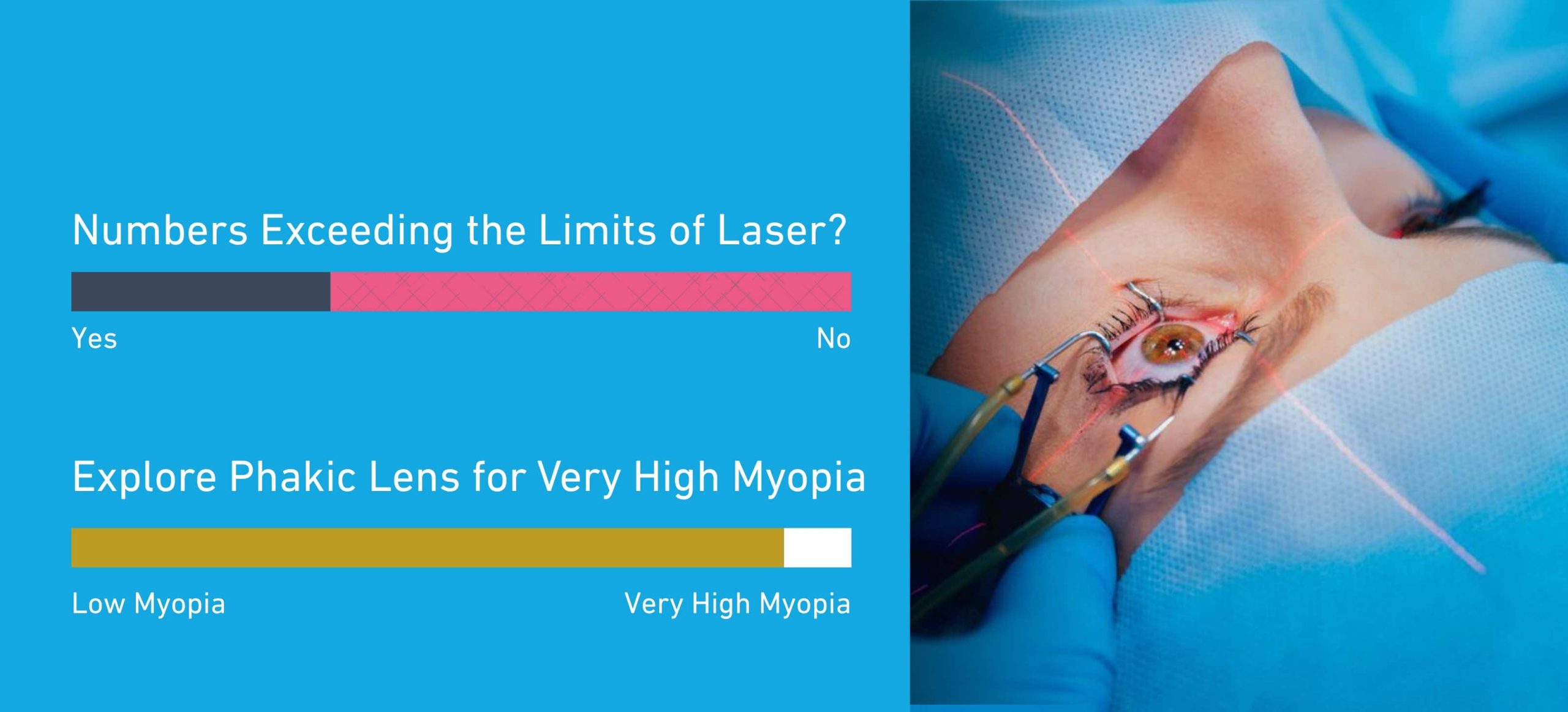
Living with extremely high myopia can feel like navigating the world through a thick fog. When your prescription numbers climb far beyond what standard laser procedures can safely address, you might wonder if permanent vision correction is even possible. The good news is that phakic lens technology offers a proven solution for those whose myopia exceeds the boundaries of conventional laser surgery. Unlike traditional refractive procedures that reshape your cornea, phakic intraocular lenses work by adding a corrective lens inside your eye while preserving your natural lens structure.
For individuals with very high myopia reaching into double-digit diopter ranges, the limitations of laser treatments become apparent during initial consultations. Corneal thickness, structural integrity, and the sheer magnitude of correction needed often place these candidates outside the safe zone for procedures like LASIK or PRK. This is where phakic lens implantation emerges as a game-changing alternative. By understanding how this non-laser myopia treatment works, who qualifies for the procedure, and what advantages it offers over other methods, you can make an informed decision about reclaiming clear vision without the daily dependence on thick glasses or contact lenses. However, Phakic lens advantages are not restricted to only high myopia or high hyperopia; any patient who would prefer an additive & reversible procedure is suitable for Phakic lenses
Table of Contents
ToggleWhat is Extremely High Myopia? The Limits of Laser Correction
Extremely high myopia refers to severe nearsightedness where distant objects appear significantly blurred while close-range vision remains relatively clear. This condition occurs when the eye’s focusing power is substantially misaligned, causing light rays to converge in front of the retina rather than directly on it. The result is a refractive error that requires strong corrective measures to achieve functional vision. People with this level of myopia often rely on thick eyeglasses or specialized contact lenses just to perform everyday tasks safely.
Laser vision correction procedures, such as LASIK and PRK, work by reshaping the cornea to adjust how light enters the eye. However, these techniques have inherent limitations tied to corneal thickness and structural stability. When myopia reaches extreme levels, the amount of tissue that would need to be removed becomes excessive, potentially compromising the cornea’s biomechanical strength. Surgeons must maintain a safe residual thickness to prevent complications such as ectasia, where the cornea weakens and bulges outward. For many patients with very high myopia, this safety threshold makes laser surgery unsuitable or even impossible.
Additionally, the precision required to correct such large refractive errors increases the risk of undercorrection, overcorrection, or visual disturbances, such as halos and glare. The cornea can only be reshaped to a certain extent before the procedure becomes unsafe or ineffective. This is why eye care professionals often recommend alternative approaches for individuals whose prescriptions push beyond the laser surgery limit, ensuring both safety and optimal visual outcomes.
What to Do If Laser Isn’t Suitable? Phakic Lenses Come Into Play
When laser procedures fall short, phakic intraocular lenses offer a compelling alternative for achieving permanent vision correction. Unlike laser surgery that permanently alters corneal tissue, phakic lenses are implanted inside the eye to correct refractive errors without removing or replacing the natural lens. The term “phakic” indicates that your eye’s original lens remains intact, allowing the implanted lens to work in harmony with your existing optical system. This approach is particularly advantageous for those with very high myopia who cannot safely undergo corneal reshaping.
The implantation procedure involves creating a small incision in the front of the eye, through which the phakic lens is carefully inserted and positioned either just in front of or just behind the iris. Made from biocompatible materials such as medical-grade plastic or silicone, these lenses are designed to remain in place permanently, providing stable and consistent vision correction. Because the natural lens is preserved, the eye retains its ability to focus at varying distances, which can be beneficial for younger patients whose accommodation is still active.
This non-laser myopia treatment is especially suited for individuals whose corneas are too thin, too steep, or otherwise unsuitable for laser ablation. By bypassing the cornea entirely, phakic lenses eliminate the structural concerns that limit laser candidacy. The result is a cornea-friendly solution that delivers clear vision without compromising the integrity of the eye’s outermost layer, making it a preferred option for many with extreme refractive errors.
The Role of Phakic Lenses in Myopia of -10 Diopters or More
For patients with myopia reaching or exceeding double-digit diopter levels, phakic lenses serve as a primary solution where other methods fall short. At this severity, the eye’s refractive error is so pronounced that traditional laser surgery would require removing an unsafe amount of corneal tissue. The phakic intraocular lens addresses this challenge by adding corrective power inside the eye rather than subtracting tissue from the cornea. This makes it possible to achieve significant vision improvement even when the prescription numbers are exceptionally high.
The FDA has approved certain phakic lens models specifically for the correction of severe myopia, recognizing their safety and efficacy in this patient population. These lenses are engineered to handle a wide range of refractive errors, providing clear, stable vision for individuals who previously had limited options beyond thick corrective eyewear. By positioning the lens in the eye’s anterior or posterior chamber, surgeons can fine-tune the optical correction to match the patient’s unique needs, delivering results that often surpass what glasses or contact lenses can achieve.
Patients with very high myopia often experience not only blurred distance vision but also distortions and reduced contrast sensitivity. Phakic lens implantation can address these issues more comprehensively than external corrective devices, as the lens works directly within the eye’s optical pathway. This internal positioning minimizes peripheral distortion and provides a wider field of clear vision, enhancing overall visual quality and daily function. For those whose numbers exceed the limits of laser, phakic lenses represent a transformative opportunity to achieve freedom from dependence on corrective eyewear.
The Advantages of Phakic Lenses in Extremely High Myopia
Choosing phakic lenses for extreme myopia correction comes with a range of benefits that make this option particularly attractive for patients who cannot pursue laser surgery. Understanding both the strengths and considerations of this approach helps you set realistic expectations and make an informed decision.
- Preserves corneal integrity: Because the procedure does not involve removing corneal tissue, the structural strength of your cornea remains intact. This cornea-friendly solution is ideal for patients with thin or irregular corneas who would otherwise be disqualified from laser treatments.
- Reversible procedure: Unlike laser surgery, which permanently alters the cornea, phakic intraocular lenses can be removed or replaced if your vision needs change over time. This flexibility provides peace of mind and adaptability for future adjustments.
- High-quality vision: Patients often report sharper, clearer vision with reduced distortion compared to thick glasses. The internal positioning of the lens minimizes optical aberrations and provides a more natural field of view.
- Suitable for extreme prescriptions: Phakic lenses can correct myopia far beyond the range of laser surgery, making them the go-to option for individuals with very high myopia or those whose numbers exceed standard treatment thresholds.
- Quick visual recovery: Many patients experience noticeable vision improvement shortly after the procedure, with minimal downtime compared to some other surgical interventions.
However, it is important to acknowledge certain considerations. The procedure requires a surgical incision and intraocular manipulation, which carries inherent risks such as infection, inflammation, or changes in intraocular pressure. Regular follow-up appointments are essential to monitor the lens position and overall eye health. Additionally, not every patient with extreme myopia will qualify, as specific anatomical and health criteria must be met to ensure safety and success.
Suitable Criteria: Is Every -10 Myopia a Candidate for Phakic Lenses?
While phakic lenses offer a powerful solution for very high myopia, not every patient with extreme refractive error automatically qualifies for the procedure. A thorough preoperative evaluation is essential to determine candidacy, as several anatomical, health, and lifestyle factors influence whether this non-laser myopia treatment is appropriate for you.
- Adequate anterior chamber depth: The space between the cornea and the iris must be sufficient to safely accommodate the implanted lens. Shallow anterior chambers can increase the risk of complications such as contact with the cornea or natural lens, making the procedure unsuitable.
- Healthy corneal endothelium: The inner layer of the cornea must have a healthy cell count and function properly. Compromised endothelial health can lead to corneal swelling or clouding after lens implantation, so this is carefully assessed during the evaluation.
- Stable refractive error: Your prescription should be stable for an extended period before considering surgery. Ongoing changes in myopia indicate that your eyes are still adjusting, and waiting until stability is achieved ensures long-term success.
- Absence of certain eye conditions: Conditions such as glaucoma, cataracts, retinal detachment, or chronic inflammation may disqualify you from receiving a phakic intraocular lens. These issues can complicate the procedure or increase the risk of adverse outcomes.
- Age considerations: While there is no strict age limit, younger patients whose eyes are still developing may be advised to wait. Conversely, older patients approaching cataract formation might benefit more from a different type of lens replacement procedure.
Your ophthalmologist will conduct a comprehensive examination, including measurements of your eye’s internal structures, to determine if phakic lens implantation is the right choice. Even if you have extreme myopia, individual factors play a critical role in ensuring both safety and optimal visual results.
Pre-Surgery Evaluation: Tests and Measurements That Matter
Before undergoing phakic lens implantation, a detailed preoperative assessment is conducted to map your eye’s unique anatomy and confirm that you are a suitable candidate. This evaluation goes far beyond a standard vision test, employing advanced diagnostic tools to measure critical parameters that influence surgical planning and outcomes. Understanding what these tests involve can help you feel more prepared and confident as you move forward with the procedure.
One of the primary measurements is anterior chamber depth, which determines whether there is enough space to safely position the lens without risking contact with surrounding structures. Imaging technologies such as optical coherence tomography or ultrasound biomicroscopy provide precise cross-sectional views of the eye’s interior, allowing your surgeon to assess dimensions with high accuracy. Additionally, corneal endothelial cell density is evaluated to ensure that the inner corneal layer is healthy enough to tolerate the presence of an intraocular lens over the long term.
Corneal topography and pachymetry are also performed to map the cornea’s shape and thickness, even though the cornea itself is not altered during the procedure. These measurements help rule out conditions like keratoconus or other irregularities that could complicate surgery or recovery. Your refractive error is measured in detail, and pupil size is assessed under various lighting conditions to ensure the lens will provide clear vision without causing glare or halos.
Finally, a thorough examination of the retina and optic nerve is conducted to detect any underlying conditions that might affect visual outcomes or increase surgical risk. This comprehensive evaluation ensures that every aspect of your eye health is considered, paving the way for a safe and successful permanent vision correction experience with phakic intraocular lenses.
Laser or Phakic Lenses? A Decision Guide for Extremely High Myopia
Deciding between laser surgery and phakic lenses for extreme myopia requires careful consideration of your individual circumstances, eye anatomy, and long-term vision goals. While laser procedures like LASIK and PRK are popular for mild to moderate myopia, they are often unsuitable for patients with very high myopia due to corneal thickness limitations and the risk of structural compromise. In these cases, phakic intraocular lenses provide a safer and more effective alternative.
If your cornea is too thin or your prescription exceeds the safe correction range for laser surgery, phakic lens implantation becomes the preferred choice. This cornea-friendly solution bypasses the need for tissue removal, preserving the cornea’s natural strength and reducing the risk of complications like ectasia. Additionally, because the lens is placed inside the eye, it can correct a much wider range of refractive errors than laser reshaping, making it ideal for those whose numbers push well beyond standard treatment thresholds.
Another factor to consider is reversibility. Laser surgery permanently alters the cornea, whereas phakic lenses can be removed or exchanged if your vision needs change or if complications arise. This flexibility is particularly valuable for younger patients whose eyes may continue to evolve over time. On the other hand, laser surgery typically involves a shorter recovery period and does not require intraocular manipulation, which may appeal to patients with less severe myopia.
Ultimately, the decision should be guided by a thorough consultation with an experienced ophthalmologist who can assess your unique anatomy, discuss the risks and benefits of each option, and help you choose the path that aligns best with your vision correction goals and lifestyle needs.
Frequently Asked Questions
Understanding phakic lenses and their role in correcting very high myopia often raises important questions. Below are answers to some of the most common concerns patients have when considering this permanent vision correction option.
Can’t myopia of -10 or higher be corrected with laser?
Laser surgery has limitations based on corneal thickness and structural safety. For extreme myopia, the amount of tissue removal required often exceeds safe thresholds, making phakic lenses a more suitable and effective alternative for achieving clear vision.
Can phakic lenses correct myopia of -15 or even -20?
Yes, phakic intraocular lenses are designed to correct a wide range of severe myopia, including prescriptions that reach well into extreme levels. Your ophthalmologist will determine the appropriate lens power based on your specific refractive error and eye anatomy.
Can I see more clearly than I can with glasses?
Many patients report sharper, more natural vision with phakic lenses compared to thick glasses. The internal lens positioning reduces peripheral distortion and provides a wider field of clear vision, often surpassing the quality achieved with external corrective eyewear.
Is the risk of surgery increased with such a high prescription?
While any intraocular procedure carries inherent risks, phakic lens implantation is generally safe when performed by an experienced surgeon. Thorough preoperative evaluation and careful surgical technique minimize complications, making it a reliable option for very high myopia.
Will I need to wear glasses after this procedure?
Most patients achieve significant independence from glasses for distance vision after phakic lens implantation. However, reading glasses may still be needed as you age, particularly if presbyopia develops. Your surgeon will discuss realistic expectations based on your individual case.
