
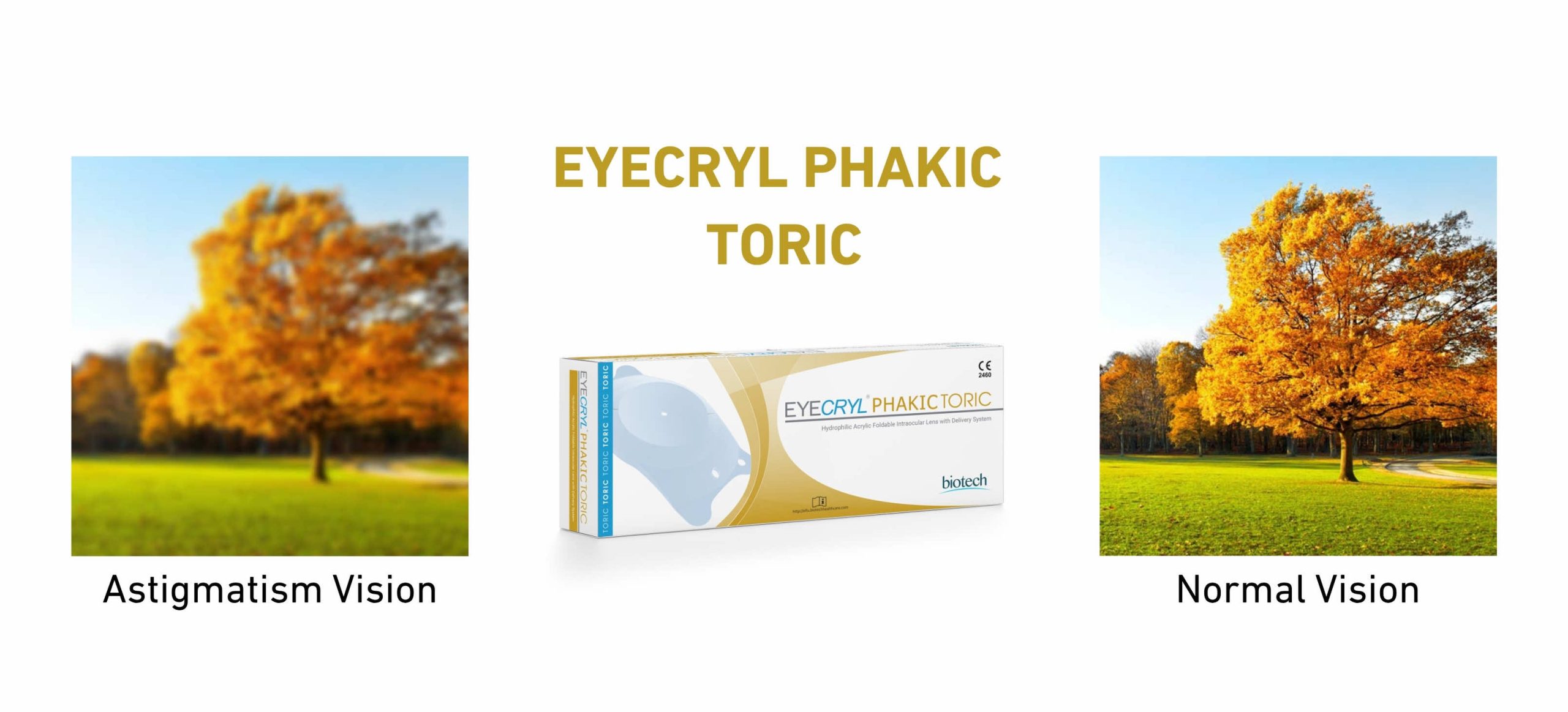
Astigmatism creates a frustrating visual experience where shadows, blurred edges, and distorted images interfere with daily life. For individuals seeking freedom from glasses and contact lenses, Toric Phakic Lens technology offers a transformative solution. Unlike traditional corrective methods, this advanced intraocular lens addresses both spherical and cylindrical refractive errors simultaneously, delivering crisp and clear vision.
The Toric Phakic Lens represents a breakthrough in refractive surgery, specifically designed for patients with moderate to high astigmatism who may not qualify for laser procedures. By preserving the natural lens while correcting visual impairment, this technology provides a reversible and highly effective alternative. Understanding how Toric Phakic Lens technology works empowers you to make informed decisions about achieving optimal visual clarity and eliminating the shadows that astigmatism creates.
Table of Contents
ToggleWhat is Astigmatism and How Does it Cause Vision Impairment?
Astigmatism occurs when the cornea or lens has an irregular curvature, preventing light from focusing evenly on the retina. Instead of a smooth, spherical surface, the eye develops an oval or football-shaped contour. This structural irregularity causes light rays to scatter, creating multiple focal points rather than a single, sharp image. The result is blurred or distorted vision at all distances, accompanied by shadows and halos around objects.
People with astigmatism often experience eye strain, headaches, and difficulty with night driving due to the way light refracts through the uneven corneal surface. The cylindrical defect means that horizontal and vertical lines appear with different levels of clarity, making reading, recognizing faces, and performing detailed tasks challenging. Unlike simple nearsightedness or farsightedness, astigmatism involves directional distortion that standard spherical corrections cannot fully address.
The severity of astigmatism varies widely among individuals. Mild cases may cause minimal symptoms, while moderate to high astigmatism significantly impacts quality of life. Traditional correction methods include glasses with cylindrical lenses or specialized contact lenses, but these external solutions have limitations. For those seeking permanent correction without compromising the natural lens, Toric Phakic Lens technology provides an innovative approach that targets the root cause of astigmatic vision impairment.
What is a Phakic Lens? How Does it Offer an Alternative for Astigmatism?
A phakic intraocular lens is an artificial lens implanted inside the eye while preserving the natural crystalline lens. Unlike cataract surgery, which removes the clouded lens, phakic lens procedures maintain your eye’s natural focusing ability. This approach is particularly beneficial for younger patients with healthy lenses who require significant refractive correction.
- Placement Strategy: The phakic lens is positioned either in front of the iris, attached to the iris itself, or behind the iris in the ciliary sulcus. Each placement option depends on anatomical considerations and the specific lens model selected for your correction needs.
- Refractive Correction Mechanism: The implanted lens works in conjunction with your natural lens to redirect light properly onto the retina. By adding the necessary refractive power, the phakic lens compensates for the eye’s inability to focus light correctly, addressing myopia, hyperopia, or astigmatism.
- Reversibility Advantage: Because the natural lens remains intact, phakic lens implantation is reversible. If your vision changes over time or new technologies emerge, the lens can be removed or replaced without permanent alteration to your eye’s structure.
- Astigmatism Solution: Standard phakic lenses correct spherical errors, but they cannot address the cylindrical component of astigmatism. This limitation led to the development of specialized toric designs that incorporate astigmatic correction directly into the lens architecture.
What is a Toric Phakic Lens? How Does it Differ from Standard Phakic Lenses?
The Toric Phakic Lens incorporates cylindrical correction into its design, enabling simultaneous treatment of both spherical and astigmatic refractive errors. While standard phakic lenses feature uniform curvature, toric versions have different powers along different meridians, matching the irregular shape of an astigmatic cornea.
- Dual-Power Architecture: A Toric Phakic Lens has a spherical anterior surface and a toric posterior surface. This combination allows the lens to correct nearsightedness or farsightedness while simultaneously addressing the cylindrical defect that causes astigmatism, eliminating the need for additional corrective measures.
- Precise Axial Alignment: The effectiveness of toric correction depends on accurate rotational positioning. The lens must be aligned with the axis of astigmatism to ensure the cylindrical power corrects the specific meridian where the corneal irregularity exists. Surgeons use detailed preoperative measurements and intraoperative marking techniques to achieve optimal alignment.
- Material and Design Variations: Toric phakic lenses are available in different materials, including rigid PMMA and foldable collamer. Foldable designs allow insertion through smaller incisions, reducing surgical trauma and accelerating recovery while maintaining the precise toric correction necessary for astigmatism treatment.
- Comprehensive Correction Range: These lenses can address a wide spectrum of refractive errors, from moderate to high levels of myopia or hyperopia combined with significant astigmatism, providing solutions for patients who exceed the treatment limits of laser vision correction.
The Secret to Clear and Sharp Vision with Toric Phakic Lenses
The remarkable visual outcomes achieved with Toric Phakic Lens technology stem from its ability to address multiple refractive errors in a single intervention. By correcting both the spherical and cylindrical components simultaneously, these lenses eliminate the visual distortions that characterize astigmatism, including shadows, blurred edges, and inconsistent focus across different viewing angles.
Contrast sensitivity improves dramatically after Toric Phakic Lens implantation. Patients report enhanced ability to distinguish fine details, read small print, and perceive depth accurately. The elimination of cylindrical distortion means that horizontal and vertical lines appear equally sharp, and objects maintain consistent clarity regardless of orientation. This comprehensive correction translates to functional vision improvements in activities such as driving, reading, and using digital devices.
The optical quality provided by toric phakic lenses often surpasses what patients experienced with glasses or contact lenses. Because the lens is positioned inside the eye, closer to the nodal point, it minimizes optical aberrations and peripheral distortions common with external corrective devices. The stable intraocular position ensures consistent vision without the shifting, fogging, or discomfort associated with contact lenses. Many patients describe their vision as natural and effortless, free from the constant awareness of corrective aids.
Who are Suitable Candidates for Toric Phakic Lenses?
Ideal candidates for Toric Phakic Lens implantation are adults with stable refractive errors who seek freedom from glasses and contact lenses but are not suitable for corneal laser procedures. Individuals with moderate to high levels of astigmatism combined with myopia or hyperopia benefit most from this technology, particularly when their refractive error exceeds the safe treatment range for LASIK or PRK.
Candidates must have healthy eyes with sufficient anterior chamber depth to accommodate the lens safely. The natural crystalline lens should be clear, without cataract formation, since phakic lens procedures preserve rather than replace this structure. Corneal health is essential, as conditions like keratoconus or severe dry eye may contraindicate the procedure. Comprehensive preoperative evaluation includes detailed measurements of corneal curvature, anterior chamber dimensions, and endothelial cell counts to ensure anatomical suitability.
Age considerations typically favor younger adults whose refractive errors have stabilized but who have not yet developed presbyopia or cataracts. Patients should have realistic expectations about outcomes and understand both the benefits and potential risks. Those with active eye infections, uncontrolled glaucoma, or certain systemic conditions may not be suitable candidates. A thorough consultation with an experienced refractive surgeon determines whether Toric Phakic Lens technology aligns with your specific visual needs and ocular health status.
Innovations in Toric Phakic Lens Technology
Recent advancements in Toric Phakic Lens design have significantly improved surgical outcomes and patient satisfaction. Foldable lens materials now allow insertion through microincisions, reducing surgical trauma and accelerating visual recovery. These biocompatible materials integrate seamlessly with ocular tissues, minimizing inflammation and promoting long-term stability within the eye.
Enhanced optical designs incorporate aspheric profiles that reduce higher-order aberrations, delivering sharper vision in challenging lighting conditions. Advanced toric calculations account for surgically induced astigmatism and ensure precise cylindrical correction across the entire optical zone. Manufacturers now offer expanded ranges of cylindrical powers, enabling correction of more severe astigmatism that previously required multiple procedures or remained uncorrectable.
Surgical techniques have evolved alongside lens technology. Femtosecond laser-assisted procedures improve incision precision and reproducibility, while advanced imaging systems provide real-time guidance for optimal lens positioning. Intraoperative aberrometry allows surgeons to verify refractive outcomes before completing the procedure, ensuring accurate axial alignment of the toric component. These innovations collectively enhance the predictability, safety, and effectiveness of Toric Phakic Lens implantation.
Digital planning tools now integrate preoperative measurements with surgical parameters, creating customized treatment plans for each patient. This personalized approach optimizes lens selection, positioning strategies, and postoperative management protocols, contributing to consistently excellent visual outcomes and high patient satisfaction rates.
Astigmatism and Phakic Lens Experience: Patient Testimonials and Clinical Results
Clinical studies demonstrate that Toric Phakic Lens implantation provides safe, predictable, and effective correction of astigmatic errors when patients are carefully selected and receive proper surgical preparation. Long-term follow-up data shows sustained visual improvements with high levels of patient satisfaction. Many individuals report life-changing improvements in daily activities, from reading and driving to participating in sports and professional tasks.
Patients frequently describe the elimination of shadows and distortions that previously characterized their vision. The clarity achieved often exceeds what they experienced with glasses or contact lenses, particularly in peripheral vision and low-light conditions. The convenience of waking up with clear vision, without reaching for corrective devices, represents a significant quality-of-life enhancement that patients consistently value.
Clinical outcomes reveal excellent stability of refractive correction over extended follow-up periods. The majority of patients achieve uncorrected visual acuity that meets or exceeds their best-corrected vision with glasses prior to surgery. Complications remain rare when experienced surgeons perform thorough preoperative evaluations and adhere to established surgical protocols. The reversibility of the procedure provides additional reassurance, knowing that the lens can be removed if circumstances change.
Patient testimonials emphasize the transformative impact of Toric Phakic Lens technology on professional performance, recreational activities, and overall confidence. The freedom from visual aids, combined with superior optical quality, makes this technology a compelling solution for individuals seeking permanent astigmatism correction.
