
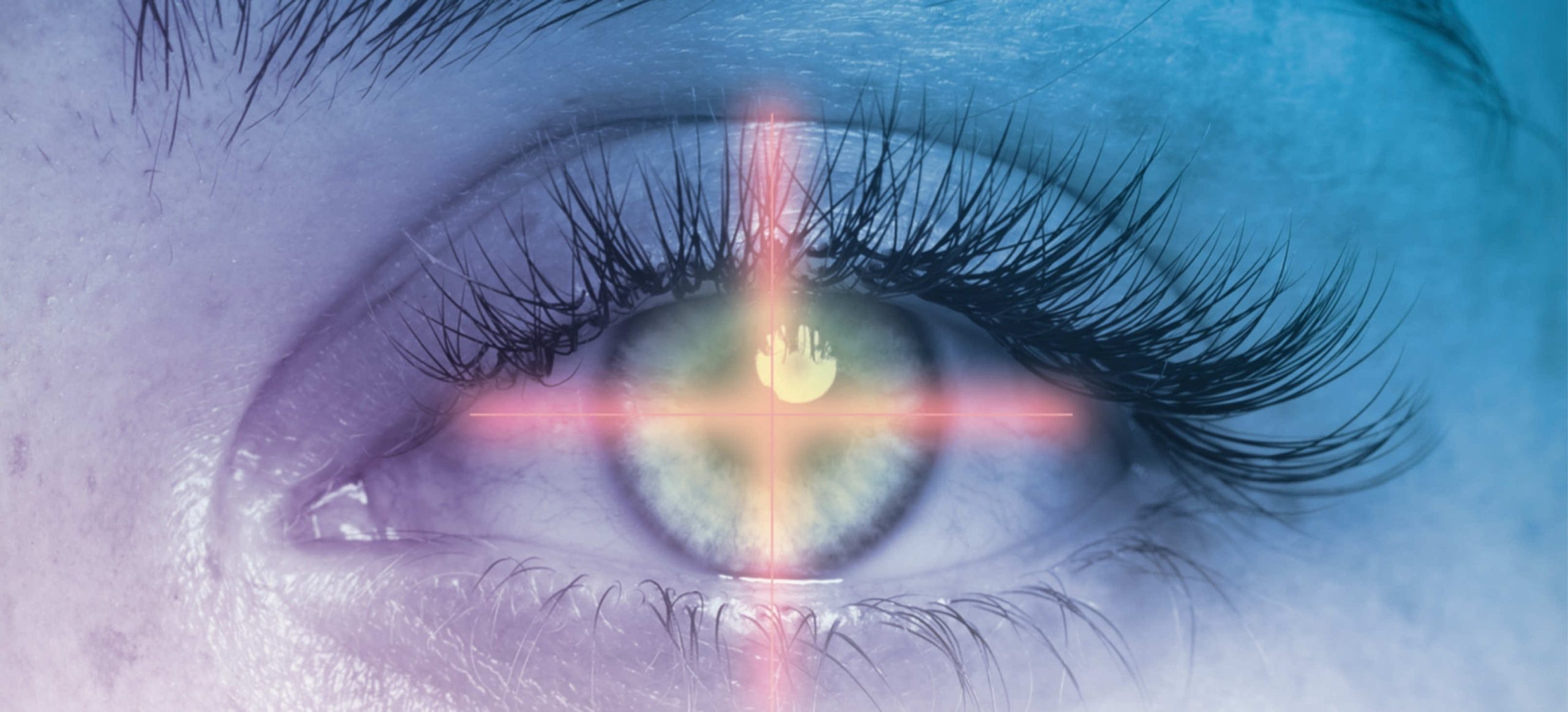
The structural integrity of the cornea is a cornerstone of eye health and directly affects the quality of vision. Phakic lenses are a modern solution that offers the possibility of correcting vision defects without interfering with the corneal. Unlike laser treatments, phakic lenses preserve corneal thickness, leaving the eye’s natural structure intact. This feature provides a significant advantage, especially for individuals with thin or weak corneal structures. Corneal stability is critical not only for clear vision but also for long-term eye health. Phakic lens technology offers a safe and effective method of vision correction by preserving the biomechanical properties of the cornea. In this article, you will discover why corneal stability is important and the structural advantages of phakic lenses.
Table of Contents
ToggleWhat is Corneal Stability? Its Role in Eye Health
Corneal stability refers to the structural integrity and ability of the cornea, the outermost layer of the eye, to maintain its shape. The cornea is responsible for a large portion of the eye’s total refractive power and ensures that light is properly focused on the retina. The thickness, curvature, and biomechanical properties of this transparent tissue directly determine visual acuity. When the structural integrity of the cornea is compromised, visual quality can be severely affected, and irreversible damage can occur.
The cornea has a complex structure composed of collagen fibers, which provide the tissue’s strength. A healthy cornea is resistant to intraocular pressure and can maintain its shape. However, when the cornea is thinned or structurally weakened, this balance is disrupted. Loss of corneal stability can predispose to progressive diseases such as keratoconus. This condition causes the cornea to take on a conical shape over time, leading to increased visual impairment.
Maintaining corneal stability is of great importance in eye health, especially when considering refractive surgery procedures. Preserving the natural structure of the cornea is a fundamental requirement for long-term eye health. Phakic lenses maintain this stability completely because they work without any intervention in the corneal tissue. This approach offers a safe method of vision correction by leaving the eye’s natural defense mechanisms and structural integrity intact.
The Relationship Between Refractive Surgery and Corneal Stability
Refractive surgery procedures involve various interventions on the cornea to correct vision defects. Laser treatments such as LASIK and PRK reshape the corneal tissue, allowing light to focus on the retina. During these procedures, corneal tissue is thinned through ablation, directly affecting the structural stability of the cornea. The reduction in corneal thickness alters the biomechanical properties of the tissue and can, in some cases, lead to long-term complications. The effect of laser treatments on corneal stability depends on the patient’s initial corneal thickness and the degree of refractive error to be corrected. Corrections for high-grade myopia or hyperopia require the removal of more tissue, which can weaken the cornea. In individuals with thin corneal structures, laser treatments carry a risk of ectasia. Ectasia means that the cornea protrudes abnormally forward, severely impairing visual quality. Corneal biomechanics describes the eye’s resistance to internal pressure and its ability to maintain its shape. After laser treatments, this biomechanical balance changes, and the cornea becomes less resistant. Therefore, corneal thickness and structural characteristics should be evaluated in detail before refractive surgery. Phakic lenses completely eliminate these risks and guarantee corneal stability because they do not interfere with the corneal tissue in any way.
Why Do Phakic Lenses Not Weaken the Cornea?
Phakic lenses are special lenses that are placed inside the eye without removing the eye’s natural lens and do not touch the corneal tissue in any way. These lenses are placed in front of or behind the iris and correct vision defects by focusing light towards the retina. Since no cutting, ablation, or tissue removal is performed on the corneal surface, the structural integrity of the cornea is completely preserved. This feature is one of the most important advantages of phakic lens technology.
While corneal tissue is permanently thinned in laser treatments, phakic lens application is completely reversible. The lens can be removed or replaced as needed, and the cornea returns to its original state. This flexibility provides great reassurance for patients. Since the corneal thickness and shape do not change in any way, the eye’s natural biomechanical properties are preserved. This is a critical advantage for long-term eye health.
Corneal stability is important not only for visual clarity but also for the overall health of the eye. Phakic lenses do not create any stress or pressure on the cornea. The lens remains in a fixed position inside the eye and does not directly contact the cornea. This ensures that the collagen structure and strength of the cornea are not affected. Phakic lenses offer a safe and effective alternative, especially for people with thin corneas or those at risk of corneal disease.
Advantages of Phakic Lenses in Terms of Corneal Stability
Phakic lenses offer several significant advantages in terms of corneal stability, making them an ideal solution for many patients. This technology, which does not interfere with the corneal tissue, protects eye health in both the short and long term.
- Preservation of corneal tissue: Unlike laser treatments, phakic lenses completely preserve the thickness and structure of the cornea. This feature leaves the cornea’s natural strength and biomechanical properties intact.
- Elimination of ectasia risk: Since there is no corneal thinning, the risk of serious complications such as ectasia is completely eliminated. This provides great reassurance, especially for patients with high-grade vision defects.
- Reversible procedure: Phakic lenses can be removed when necessary, and the cornea returns to its original state. This flexibility is a significant advantage for patients and allows for different treatment options in the future.
- Suitability for thin corneas: Individuals with thin corneal structures unsuitable for laser treatments can be safely treated with phakic lenses. Corneal thickness does not pose any problem. High visual quality: Because corneal stability is maintained, visual quality remains high in the long term, and visual acuity does not decrease over time.
These advantages make phakic lenses technology one of the most reliable refractive correction methods in terms of corneal stability, offering an ideal option for many patients.
Phakic Lens Option for Those with Thin or Weak Corneal Surfaces
Individuals with thin or weak corneal structures may not be suitable candidates for traditional laser treatments. Corneal thickness is a critical factor for procedures like LASIK or PRK, as these treatments require the removal of corneal tissue. Laser treatment in patients with insufficient corneal thickness can lead to serious complications and a risk of corneal ectasia. This limits many patients’ vision correction options and prompts them to seek alternative solutions.
Phakic lenses offer an ideal alternative for patients with thin corneal structures. Corneal thickness is irrelevant because the lens is placed inside the eye and does not interfere with the corneal tissue. This feature allows patients who are not suitable for laser treatments to benefit from high-quality vision correction. Since corneal stability is fully preserved, the risk of long-term complications is minimized.
Phakic lenses are also a safe option for individuals at risk of corneal diseases such as keratoconus or corneal dystrophy. These diseases are characterized by structural weakness of the cornea, and laser treatments can worsen this condition. Phakic lenses preserve the existing corneal structure and do not contribute to disease progression because they do not create any stress on the cornea. Therefore, they are the safest refractive correction method for patients at risk for corneal health issues.
Next Generation Developments in Phakic Lens Technology from a Structural Perspective
Phakic lens technology is a constantly evolving field, with next-generation designs offering even more advanced features in terms of corneal stability and eye health. Modern research focuses on optimizing lens materials and designs to develop safer and more effective solutions.
- Advanced biocompatible materials: Next-generation phakic lenses are made from materials that are more compatible with intraocular tissues. These materials reduce the risk of inflammation and increase long-term biocompatibility. In terms of corneal stability, these materials provide significant advantages by minimizing intraocular pressure and tissue reactions.
- Anatomically adapted designs: Modern lens designs are being developed to better adapt to the eye’s natural anatomy. By optimizing the distance between the iris and cornea, these designs do not create any pressure or stress on the cornea.
- Minimally invasive placement techniques: New surgical techniques are making the lens placement process less invasive. Smaller incisions and advanced surgical instruments minimize corneal trauma and accelerate the healing process.
- Improved optical quality: Advanced optical designs provide clearer vision and fewer side effects. While corneal stability is maintained, patients benefit from improved visual acuity and contrast sensitivity.
These advancements make phakic lens technology even safer and more effective in terms of corneal stability, making it possible for more patients to benefit from this treatment in the future.
