
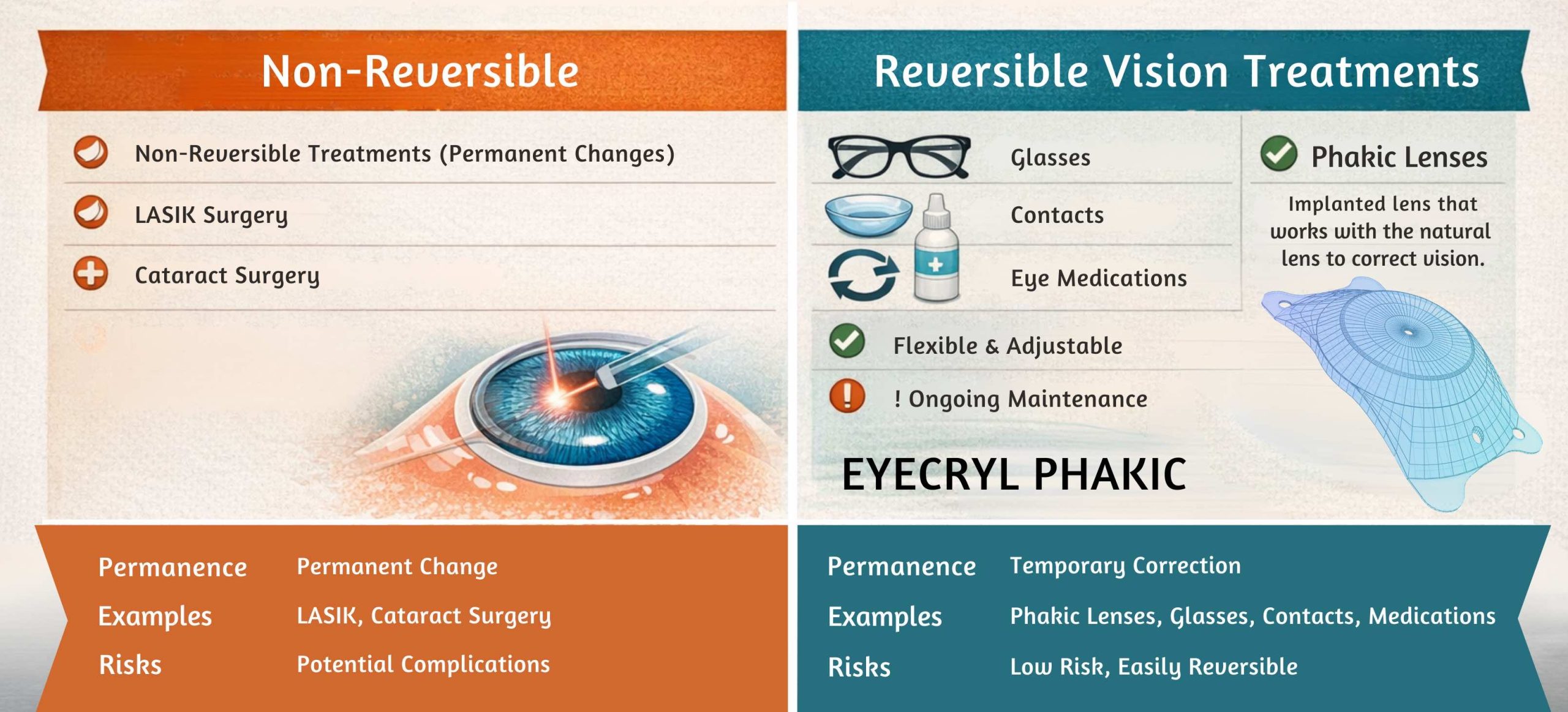
Phakic lenses represent a revolutionary approach to vision correction that offers the unique advantage of reversibility while maintaining the natural lens of the eye. Unlike traditional laser surgery that permanently alters corneal tissue, phakic lens treatment provides an effective visual impairment solution that can be adjusted or removed if circumstances change. This innovative intraocular lens implant technology has transformed the landscape of refractive surgery by offering patients a laser alternative that preserves their natural lens while delivering exceptional visual outcomes.
The concept of reversible eye surgery has gained significant traction among both patients and eye care professionals due to its flexibility and safety profile. Phakic lenses work by adding corrective power to the eye’s existing optical system rather than removing tissue, making them an ideal non-permanent eye correction option for individuals seeking high-quality vision without permanent anatomical changes.
Table of Contents
ToggleWhat is the Difference Between Non-Reversible and Reversible Treatments for Vision Impairments?
The fundamental difference between non-reversible and reversible vision correction treatments lies in their approach to modifying the eye’s optical system. Permanent treatments, such as LASIK and PRK laser surgeries, involve the irreversible removal of corneal tissue to reshape the eye’s focusing ability. Once this tissue is removed, it cannot be restored, making these procedures permanently alter the eye’s natural structure.
Reversible treatments like phakic lenses, however, work by adding corrective elements to the eye without removing or permanently altering existing tissues. These procedures maintain the eye’s natural anatomy while providing vision correction through the implantation of specialized lenses that can be removed or replaced if needed. This approach offers patients the security of knowing their treatment can be modified or reversed should their vision needs change over time.
The reversibility factor becomes particularly important when considering long-term eye health and the potential for future medical advances. Patients who choose reversible options maintain their eligibility for newer treatments that may become available, while those who undergo permanent procedures may have limited options for further enhancement or correction.
Additionally, reversible treatments often provide better outcomes for patients with extreme refractive errors that fall outside the safe treatment range for laser surgery. This makes phakic lenses a better option for individuals with high degrees of myopia, hyperopia, or astigmatism who might not be suitable candidates for permanent corneal procedures.
What is a Phakic Lens? How Does It Work, and What Does Reversible Mean?
A phakic lens is a specialized intraocular lens implant designed to correct refractive errors while preserving the eye’s natural crystalline lens. The term “phakic” refers to the presence of the natural lens, distinguishing these devices from standard intraocular lenses used in cataract surgery where the natural lens is removed.
These lenses work by being surgically placed inside the eye, typically in the posterior chamber between the iris and the natural lens. The phakic lens adds or subtracts optical power to correct vision problems such as myopia, hyperopia, and astigmatism. The procedure involves creating a small incision in the cornea through which the folded lens is inserted and then positioned in its designated location within the eye.
The reversible nature of phakic lenses means that they can be surgically removed if necessary, returning the eye to its pre-surgical state. This reversibility is achieved because the procedure does not involve removing or permanently altering the eye’s natural structures. Instead, it adds a corrective element that can be extracted through a similar surgical process to the initial implantation.
Three main types of phakic lenses are available: angle-supported lenses that rest in the anterior chamber angle, iris-fixated lenses that attach to the iris tissue, and sulcus-supported lenses that sit in the ciliary sulcus behind the iris. Each type offers specific advantages depending on the patient’s eye anatomy and refractive error characteristics.
How Phakic Lenses Differ from Laser Surgery
The primary distinction between phakic lenses and laser surgery lies in their fundamental approach to vision correction and tissue preservation. Laser procedures like LASIK, PRK, and SMILE work by permanently reshaping the cornea through precise tissue removal, while phakic lenses add corrective power without altering existing eye structures.
Phakic lenses can treat a much wider range of refractive errors compared to laser surgery. While laser procedures are typically limited to treating myopia up to -10 diopters and hyperopia up to +6 diopters, phakic lenses can effectively correct much higher degrees of refractive error, making them suitable for patients who fall outside the safe treatment zone for corneal procedures.
Another significant difference is the preservation of natural accommodation with phakic lenses. Since the natural lens remains intact and functional, patients maintain their ability to focus at different distances naturally. Laser surgery, particularly in older patients, may affect accommodation and near vision capabilities due to corneal shape changes.
The recovery process also differs substantially between these approaches. Laser surgery typically offers faster initial visual recovery, with many patients experiencing improved vision within 24-48 hours. Phakic lens implantation, being an intraocular procedure, may require a slightly longer healing period, but often provides more stable long-term results with less risk of regression.
Risk profiles vary between the two approaches as well. Laser surgery carries risks related to corneal healing, dry eyes, and the potential need for enhancement procedures. Phakic lenses, as intraocular procedures, have different risk considerations, including potential complications such as cataract formation, endothelial cell loss, and rare instances of lens rotation or dislocation.
The Effect of Reversible Vision Correction on Patient Psychology
The psychological impact of choosing reversible vision correction extends far beyond the physical aspects of the procedure, significantly influencing patient satisfaction and peace of mind. Knowing that their vision correction can be modified or reversed provides patients with a sense of security that is often absent with permanent surgical options.
This psychological comfort is particularly important for patients who may be apprehensive about permanent changes to their eyes. The reversible nature of phakic lenses allows individuals to proceed with confidence, knowing they have options if their circumstances change or if new technologies become available in the future. This flexibility reduces anxiety and decision-making stress commonly associated with non-reversible surgical procedures.
Patients often report feeling more in control of their treatment when choosing reversible options. This sense of control contributes to better treatment compliance and more positive outcomes, as patients feel they are active participants in their care rather than passive recipients of irreversible changes.
The reversibility factor also addresses concerns about long-term eye health and aging. As patients grow older and their eyes naturally change, the ability to modify or remove their vision correction provides reassurance that they can adapt to these changes without being constrained by previous permanent surgical decisions.
The Advantages of Long-Term Use of Phakic Lenses
Long-term use of phakic lenses offers numerous advantages that become more apparent over extended periods of wear. These benefits contribute to sustained patient satisfaction and better visual outcomes throughout the lens lifespan.
- Stable vision correction: Phakic lenses provide consistent refractive correction that remains stable over time, unlike some laser procedures that may experience regression or changes in correction strength.
- Preservation of corneal integrity: By avoiding corneal tissue removal, phakic lenses maintain the eye’s natural biomechanical properties, reducing the risk of corneal weakening or ectasia.
- Accommodation preservation: The natural lens remains functional, allowing patients to maintain their natural focusing ability for both distance and near vision.
- Adaptability to prescription changes: If significant refractive changes occur, the lens can be exchanged for a different power rather than requiring additional surgical procedures.
- Reduced dry eye symptoms: Unlike laser surgery, which can exacerbate dry eye conditions, phakic lenses typically do not affect tear film stability or corneal sensation.
- Better night vision: Many patients experience superior night vision compared to laser surgery, with reduced incidence of halos and glare.
The biocompatible materials used in modern phakic lenses are designed for long-term intraocular placement, with many lenses showing better stability and clarity even after decades of use. Regular monitoring ensures optimal lens position and eye health throughout the treatment period.
Who is Suitable for Phakic Lenses? Eligibility Criteria
Determining suitability for phakic lenses involves a comprehensive evaluation of multiple factors, including refractive error characteristics, eye anatomy, and overall ocular health. Ideal candidates typically meet specific criteria that ensure optimal outcomes and minimize potential complications.
Age requirements specify that candidates should be at least 21 years old with stable refractive error for a minimum of six months prior to surgery. This stability ensures that the correction provided by the phakic lens will remain appropriate long-term and reduces the likelihood of requiring lens exchange due to prescription changes.
Refractive error parameters play a crucial role in candidacy determination. Phakic lenses are particularly well-suited for patients with high degrees of myopia (typically up to -25.00 diopters), moderate to high hyperopia (up to +10.00 diopters), and astigmatism up to 6.00 diopters. These ranges often exceed the safe treatment limits for laser surgery.
Anatomical considerations include adequate anterior chamber depth, healthy corneal endothelium with sufficient cell density, and normal intraocular pressure. The anterior chamber must be deep enough to accommodate the lens without touching other eye structures, typically requiring a depth of at least 2.8 mm from the corneal endothelium to the anterior lens capsule.
Contraindications include active eye inflammation, glaucoma, cataracts, previous intraocular surgery, and certain corneal conditions. Pregnant or nursing women are typically advised to postpone the procedure until their refractive error stabilizes post-pregnancy.
Things to Consider When Applying Phakic Lenses
Several important considerations must be evaluated when contemplating phakic lens implantation to ensure optimal outcomes and patient satisfaction. These factors encompass pre-operative preparation, realistic expectations, and long-term care requirements.
Pre-operative evaluation requires a comprehensive eye examination, including detailed measurements of corneal curvature, anterior chamber depth, endothelial cell count, and precise refractive error assessment. Pupil size measurement under various lighting conditions is crucial for proper lens sizing and positioning.
Surgical technique selection depends on individual eye anatomy and surgeon’s preference. The procedure typically involves topical anesthesia, small incision creation, lens insertion through the incision, and careful positioning within the eye. Post-operative care includes antibiotic and anti-inflammatory eye drops, regular follow-up appointments, and activity restrictions during initial healing.
Long-term monitoring is essential for phakic lens patients, requiring regular eye examinations to assess lens position, endothelial cell health, intraocular pressure, and overall eye condition. Early detection of potential complications allows for prompt intervention and optimal outcomes.
Cost considerations include the initial procedure expense, potential need for enhancement or lens exchange, and ongoing monitoring costs. While phakic lenses may have higher upfront costs compared to some laser procedures, their reversibility and adaptability can provide long-term value.
Lifestyle factors should also be considered, including occupation, recreational activities, and personal preferences. Patients engaged in contact sports or activities with a high risk of eye trauma may need special precautions or alternative treatment options.
Frequently Asked Questions
Yes, phakic lenses can be surgically removed if necessary, returning the eye to its pre-surgical state. However, while removal is possible, complete restoration to the exact previous condition cannot be guaranteed due to natural healing processes.
Both procedures have better safety profiles when performed by experienced surgeons. Phakic lenses may be safer for patients with high refractive errors or thin corneas, while laser surgery might be preferable for those with lower corrections and suitable corneal anatomy.
Modern phakic lenses are designed for permanent placement and can remain in the eye indefinitely with proper monitoring. Many patients have worn their lenses successfully for over 20 years without complications.
The procedure is typically performed under topical anesthesia and is generally well-tolerated. Most patients experience minimal discomfort during surgery and mild soreness for a few days post-operatively, which is easily managed with prescribed medications.
Yes, one of the major advantages of phakic lenses is that they can be exchanged for different powers if significant prescription changes occur, providing long-term adaptability that permanent procedures cannot offer.
